House Clearance Virginia Water — Recycling and Sustainability Commitment
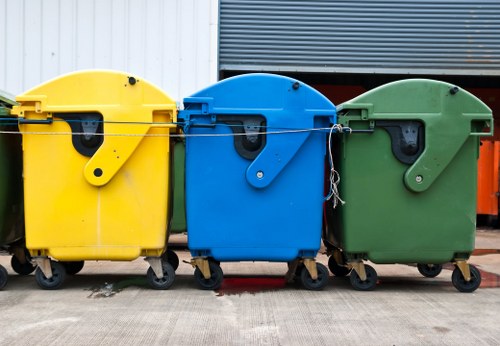 House Clearance Virginia Water is committed to delivering an eco-friendly waste disposal area approach across every clearance. Our local teams focus on practical, measurable steps to ensure that house clearances and property clear-outs in Virginia Water set a high standard for a sustainable rubbish area. We balance reuse, recycling and safe disposal so that less ends up in landfill and more items find a new life.
When you instruct Virginia Water house clearance services, we apply clear sorting systems on-site to separate reusable goods from recyclable materials. Our clear-out crews are trained to segregate paper, card, mixed plastics, glass, metal, textiles and electricals. In line with the borough's approach to waste separation, we support food waste and garden waste streams where appropriate and follow local kerbside sorting practices to improve recovery rates.
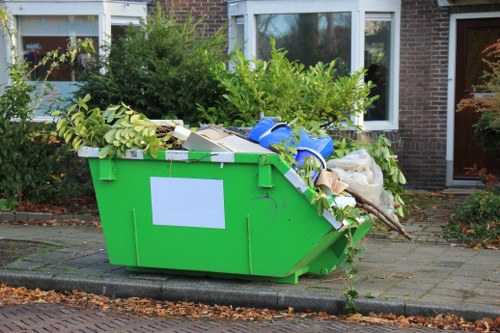 Our recycling percentage target is ambitious but practical: we aim to divert 75% of collected material from landfill through reuse, recycling and authorised transfer. This target for house clearance in Virginia Water is underpinned by monitoring, reporting and continual improvement of our handling processes.
How we achieve a low-impact house clearance in Virginia Water
To help create a genuine sustainable rubbish area, our model uses three pillars: reuse, recycling and responsible disposal. We prioritise donation and resale for furniture and household goods, partner with local social enterprises, and ensure hazardous items and electrical equipment are processed through licensed waste streams. Virginia Water house clearance isn't just about removing items — it's about making smart choices on what happens next.
 Local transfer stations play a key role in our logistics. We work closely with nearby transfer stations across Surrey and the Runnymede borough to ensure materials are taken to the correct facilities for processing. These transfer hubs allow us to sort large volumes efficiently and to route materials to specialist recyclers for wood, metals, WEEE (waste electrical and electronic equipment), and inert materials.
Our operational standards include:
- On-site segregation of recyclables to reduce contamination.
- Partnerships with charities to maximise reuse of household goods and furniture.
- Use of licensed transfer stations for compliant disposal and recycling.
- Low-carbon fleet and optimized routing to cut emissions.
Charity partnerships, local recycling activity and low-carbon transport
We maintain active relationships with local charities and community groups so that usable items from a house clearance in Virginia Water are offered to people who need them. Typical partners include furniture redistribution projects, clothing banks and community reuse initiatives. These partnerships support social value while keeping a wide range of items out of the waste stream.
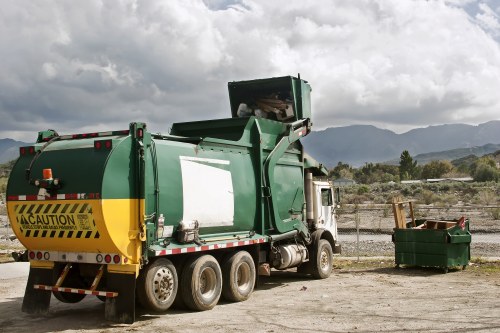 Recycling activity relevant to the area includes the borough's kerbside collections and localised drop-off schemes: co-mingled dry recycling, separate glass and paper streams, food waste collection and garden waste services. Our teams align with these boroughs' approach to waste separation when consolidating material destined for local authority or commercial recycling facilities, which improves contamination rates and end-market quality.
 Low-carbon vans are central to creating a greener service. Our fleet includes electric and plug-in hybrid vans, as well as modern Euro 6 vehicles for routes that currently require greater range. Telematics and route optimisation reduce mileage and idle time, lowering CO2 and NOx emissions while maintaining a rapid, efficient house clearance in Virginia Water. The combined effect is fewer trips to transfer stations and an overall smaller carbon footprint for the clearance process.
We embrace measurable improvement. Regular reporting of recycling performance allows us to track progress against our target and to identify waste streams where further gains can be made. Our audits look at the percentage of material diverted, the volume donated to charity, and the weight sent to recycling partners versus landfill. This transparency makes our sustainability claims verifiable and actionable.
Education and collaboration are part of our mission: we brief clients briefly on how best to prepare a property for clearance to facilitate reuse and recycling, and we work with local councils to align with community recycling campaigns. By combining education, partnerships and operational excellence, House Clearance Virginia Water aims to raise standards across the local sector.
Practical examples of what we divert or recycle during clearances include:
- Furniture and household items repaired or passed to charities for resale.
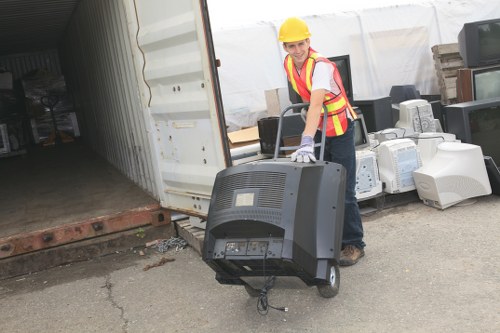
- WEEE collected and sent to specialist recyclers for recovery of metals and plastics.
- Textiles sorted for reuse or recycled through textile recyclers.
- Bulky wood and construction waste taken to licensed processing facilities.
By combining a clear recycling percentage target, coordinated use of local transfer stations, meaningful charity partnerships and a growing fleet of low-emission vans, we are transforming how rubbish removal is perceived in and around Virginia Water. Our aim is to maintain a consistently high diversion rate while offering dependable, professional clearances.
In summary, our approach to environmental management for Virginia Water house clearance balances pragmatism with ambition: meet local waste separation practices, maximise reuse and donation, and reduce transport emissions. That way, each clearance strengthens a local sustainable rubbish area and contributes to a healthier environment for the whole community.
