Health and Safety Policy — House Clearance Virginia Water
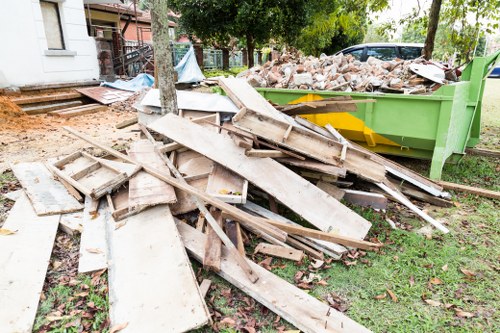 This Health and Safety Policy sets out the commitments of our house clearance and rubbish removal service to protect employees, clients and the public. It applies across all house clearance activities, waste clearance operations and associated rubbish collection tasks carried out by the company. The policy is designed to be practical and proportionate, supporting safe working practices and compliance with general health and safety expectations rather than listing site-specific legal requirements.
Our objective is to provide a safe, efficient clearance service that minimises risk while delivering reliable clearance services. Every member of staff is expected to follow the rules and procedures laid out here, and managers are responsible for ensuring those rules are applied consistently during removals, skip loading, recycling segregation and hazardous waste handling.
 Responsibility for implementing this policy rests with senior management, who will allocate sufficient resources for training, protective equipment and ongoing monitoring. Line managers and supervisors will carry out regular checks and risk assessments prior to each job. Employees must report hazards, follow instructions and take reasonable care for their own safety and that of others during all waste clearance, rubbish removal and house clearance operations.
Risk assessment and safe systems of work
All clearance jobs require a pre-task risk assessment that identifies hazards such as manual handling, sharps, asbestos suspicion, contaminated items, and unstable structures. The risk assessment will determine controls including mechanical aids, two-person lifts, safe routes for rubbish transport and segregation points for recyclable materials. Clearance teams must follow the control measures identified and update the assessment if conditions change during the job.
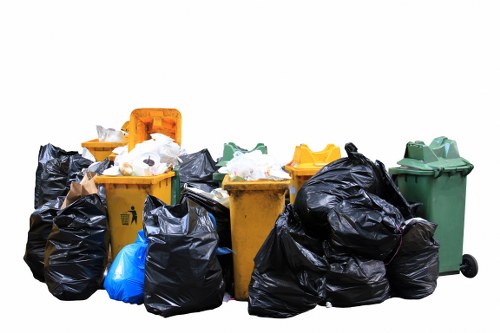 Safe systems of work include the use of trolleys, sack trucks, hoists and harnesses where appropriate, and a ban on solo lifting where heavy items are involved. Drivers and loaders should communicate clearly during vehicle loading and unloading to avoid pinch points and crush injuries. Where hazardous waste or potentially contaminated items are found, work will pause until the nature of the material is identified and the appropriate disposal method agreed.
Personal protective equipment (PPE) is mandatory where risks cannot be eliminated. Required items may include gloves, high-visibility clothing, steel-toe footwear, eye protection and respiratory masks. PPE standards are specified in job briefings and must be inspected and maintained. Strong emphasis is placed on correct PPE selection for rubbish collection, bulky waste handling and chemical spill response.
Training, competence and behaviour
Training is a cornerstone of this policy. All staff receive induction training that covers safe manual handling, use of equipment, hazardous waste awareness and emergency procedures. Ongoing competence checks and refresher courses ensure that teams remain adept at safe clearance and rubbish removal techniques. Supervisors are trained to identify unsafe acts and coach staff on safer methods.
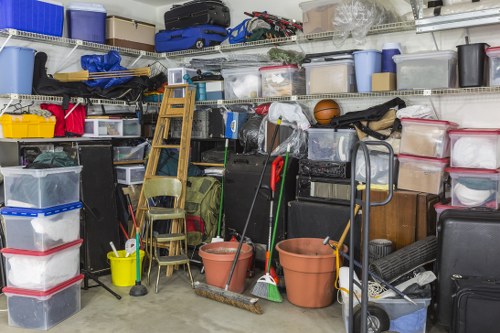 The company encourages a reporting culture where near-misses and hazards are logged and reviewed. Incident reports trigger investigations and corrective actions focused on preventing recurrence. Disciplinary action may follow deliberate breaches of safety rules, while positive safety behaviours are recognised to reinforce consistent good practice in waste clearance and house clearance operations.
 Vehicles and mobile plant used for clearance and rubbish removal are maintained to standard schedules. Daily vehicle checks, secure load procedures and driver training reduce risks on the road and at collection sites. Where lifting equipment or powered tools are used, operators must be authorised and the equipment inspected before use.
Emergency preparedness includes accessible first-aid kits, trained first-aiders and clear procedures for dealing with serious injuries, fire and hazardous spills. Evacuation routes at client properties are identified during the initial site assessment and communicated to the team. Where required, liaison with emergency services will be coordinated by senior staff, keeping clients and neighbours informed about safety measures in place.
Waste segregation and environmental controls are embedded within job planning. The company promotes recycling and the appropriate disposal of general rubbish, bulky items and controlled waste streams. Teams follow segregation lists and use labelled containers to reduce cross-contamination and ensure that recyclable materials are diverted from landfill where practical. Spillage kits and absorbents are available to control accidental releases.
Monitoring and review: regular audits, toolbox talks and safety inspections ensure that the policy remains effective. Performance indicators include incident rates, audit findings and completion of training. This policy will be reviewed at least annually and after any significant event or change in operations to ensure continuous improvement in our house clearance and rubbish removal services.
Key responsibilities are summarised as follows:
- Management: provide resources, set standards and review performance;
- Supervisors: conduct risk assessments, ensure safe systems of work and maintain records;
- Employees: follow instructions, use PPE and report hazards promptly.
By signing up to this policy, the company and its staff commit to a proactive approach to health and safety in every aspect of house clearance, waste clearance and rubbish removal work. Our aim is to deliver dependable services while safeguarding people and the environment, and to maintain public confidence through consistent, professional practice.
This policy is a living document and forms part of our operational systems for safety, training and environmental management across all service areas.
