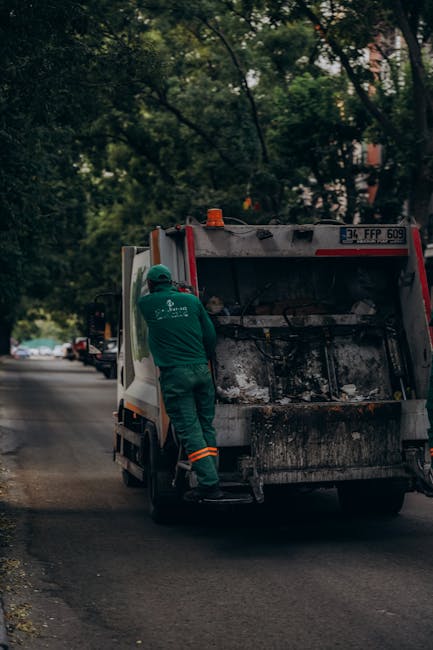
Avoid hidden charges in Virginia Water rubbish removal quotes
If you have ever compared rubbish removal prices and thought, "That looks fine... but what's the catch?", you are not alone. Hidden extras can turn a simple clear-out into a frustrating, expensive mess. This guide explains how to avoid hidden charges in Virginia Water rubbish removal quotes, what a proper quote should include, and how to spot the little warning signs before you book. Whether you are clearing a garage, moving out of a flat, or arranging a full house clearance, a few smart checks can save you money and a lot of hassle.
Truth be told, most bad surprises come from vague pricing, poor communication, or assumptions made too early. The good news? Those are all fixable.
Why Avoid hidden charges in Virginia Water rubbish removal quotes Matters
Price surprises are more than annoying. They can change the whole feeling of a job. A quote that starts as "reasonable enough" can become awkward when extra labour, access issues, parking delays, or "special disposal" fees appear at the end. In a place like Virginia Water, where properties vary from compact flats to larger homes with tight drives, side access, or long paths, those details matter more than people often expect.
Why does this matter so much? Because rubbish removal is usually booked at a stressful moment. You may be clearing before a move, after renovation work, following a bereavement, or simply trying to get on top of clutter. In those moments, nobody wants a back-and-forth over GBP30 here or a "discretionary" charge there.
There is also a trust issue. A transparent quote is a sign that the operator knows their trade, asks the right questions, and values your time. A vague quote can mean the opposite. And to be fair, once you have loaded furniture into a van and a team is on site, it becomes much harder to challenge the final bill.
Clear pricing and quote expectations are not just about budget control. They are part of getting the job done calmly, without last-minute friction.
How Avoid hidden charges in Virginia Water rubbish removal quotes Works
The simplest way to avoid hidden charges is to understand how rubbish removal pricing is usually built. Most quotes are based on a mix of volume, weight, labour, access, waste type, and disposal costs. That sounds complicated, but in practice it comes down to a few key questions: how much is there, where is it located, how easy is it to remove, and what kind of waste is it?
A proper quote should be clear about what is included. For example:
- Labour for loading the waste
- Transport to the disposal or recycling facility
- Basic disposal costs for standard waste
- Any known surcharges for heavy, bulky, or specialist items
- VAT, if applicable, or clear wording that confirms whether it is included
Where hidden charges often creep in is the gap between what was described and what the team finds on arrival. Maybe the loft was accessed through a tight hatch. Maybe the garden waste was wetter and heavier than expected. Maybe the old wardrobe was solid wood and took two people longer than planned. None of that is unusual, but it should be explained before collection if it affects the price.
If you are comparing providers, it helps to read the quote as if you were preparing a delivery driver for a narrow street on a wet Friday afternoon. What would they need to know? The more accurate your description, the less room there is for surprise charges later.
For larger or more complex jobs, it may be useful to look at related services such as house clearance, home clearance, or office clearance, because these often involve different labour and access considerations from a simple one-item collection.
Key Benefits and Practical Advantages
When you know how to avoid hidden charges, the whole process becomes easier. Not just cheaper, easier. And that matters. A transparent quote gives you room to plan, compare, and choose on merit rather than on guesswork.
- Better budgeting: You can set aside the real cost instead of a best-guess number.
- Fewer disputes: Clear scope reduces awkward conversations on the day.
- Faster booking: Good providers can confirm jobs more confidently when details are complete.
- Better service match: You can choose the right service for the waste type, not just the first one that answers the phone.
- More trust: Transparent pricing usually goes hand in hand with better communication elsewhere.
There is also a quieter benefit that people overlook. Once the pricing is clear, you stop second-guessing everything. You are not wondering whether the "all-in" figure really is all-in. That mental relief counts, especially during a busy week when the bins are already full and the hallway looks like a temporary storage unit. We have all been there, slightly.
If your waste includes awkward pieces of furniture, it may be worth checking furniture clearance or furniture disposal options so the company can price the job properly from the start.
Who This Is For and When It Makes Sense
This approach is useful for almost anyone booking rubbish removal in Virginia Water, but it is especially important if your job is not a simple "one bag, one stop" collection. If you are moving house, clearing after renovation, emptying a garage, or dealing with mixed waste, the chance of added costs goes up.
You will benefit most if you are:
- A homeowner preparing for a sale, rent change, or refurbishment
- A tenant clearing a flat or leaving a property tidy for handover
- A landlord or letting agent managing end-of-tenancy waste
- A small business clearing office furniture or general waste
- A contractor handling builders' waste from a worksite
- Someone decluttering a loft, garage, or garden with mixed materials
It also makes sense if you want to compare services across different job types. For instance, a garage clearance may look similar to a loft clearance on the surface, but access, dust, item weight, and sorting time can be very different. Same with garden clearance versus mixed general waste. Not the same job. Not even close sometimes.
Let's face it: if you only ask "How much?" and stop there, you may get a headline price that means almost nothing. The real value is in understanding what that price covers.
Step-by-Step Guidance
Here is a practical way to reduce the risk of hidden fees before you book.
- List everything that needs removing. Include obvious items and the awkward bits too: broken shelving, under-stairs clutter, mattress, rubble, old paint tins, or bags in the shed.
- Describe access clearly. Mention stairs, narrow hallways, basements, garden gates, parking distance, or any building restrictions.
- Share photos if possible. A few simple images can make a huge difference to quote accuracy.
- Ask what the quote includes. Labour, loading, disposal, congestion or parking challenges, VAT, and any minimum charges should all be clear.
- Ask what might trigger an extra fee. Heavy lifting, hazardous items, extra volume, or same-day changes are common reasons.
- Confirm the waste type. Mixed household waste, builders' waste, bulky furniture, and business waste are often priced differently.
- Get the wording in writing. Even a short email summary can help prevent misunderstanding later.
- Check what happens if the load changes. If the team finds more waste than expected, ask how the price will be updated.
A small real-world example: if you say "a few bits from the garage" but the job turns out to include wet timber, old tools, a fridge, and several bags of builder's rubble, the quote may need adjusting. That is not automatically unfair. The issue is whether the change was explained before anyone started lifting.
For broader clear-outs, you might also compare waste removal with dedicated services like builders waste clearance or garage clearance. Matching the job to the service is one of the easiest ways to avoid extra costs later.
Expert Tips for Better Results
Here are the little things that make a big difference in practice.
- Be brutally specific. "Three-seat sofa with no cushions" is better than "one sofa".
- Ask about minimum charges. Some jobs have a floor price, even for small loads.
- Clarify whether loading time is included. If the team has to dismantle items or sort mixed waste, that can affect the final total.
- Check the quote against the actual waste. If the quote is based on a photo, make sure the photo shows the full pile, not just the front edge of it.
- Request a breakdown where the job is complex. You do not need a legal contract novel. Just enough detail to understand the basis of the price.
- Separate what can be reused, recycled, or disposed of. That helps you understand why different items may cost differently.
One useful habit: ask, "What would make this price change?" It is a simple question, but it flushes out a lot of uncertainty. If the answer is vague, that tells you something. If the answer is clear and calm, that tells you something too.
Also, trust your instincts. If the quote sounds too cheap compared with the detail you gave, it might be missing something. Sometimes that is harmless. Sometimes it is not. The low number is lovely until it suddenly isn't.
If payment clarity matters to you, it is worth reviewing payment and security so you understand how a provider handles transactions and what safeguards are in place.
Common Mistakes to Avoid
Most hidden charge problems start with small avoidable mistakes. Nothing dramatic. Just the kind of thing people miss when they are busy.
- Not mentioning everything: A single omitted item can change the price if it is heavy, awkward, or restricted.
- Assuming access is easy: A ground-floor flat and a first-floor flat are not always the same thing in operational terms.
- Forgetting about parking: If the vehicle cannot stop near the property, labour time can increase.
- Ignoring waste categories: Household rubbish, furniture, garden waste, and builders' waste may all be treated differently.
- Accepting vague wording: Phrases like "subject to inspection" are not automatically bad, but they should be explained plainly.
- Focusing only on the cheapest price: The cheapest quote can become the most expensive by the end. Annoying, but common.
Another mistake is failing to check the provider's policies if the job is sensitive or complicated. For example, if you are choosing a company for a business job, it may help to review business waste removal and related service details before making a decision.
And if you ever feel rushed into a booking, slow it down. A decent operator should be able to explain the price without making you feel silly for asking. If not, well... that is useful information in itself.
Tools, Resources and Recommendations
You do not need fancy software to avoid hidden charges. A few simple tools are usually enough.
- A camera phone: Use it to photograph the full load from a few angles.
- A notes app: Write down item counts, access details, and any special instructions.
- A tape measure: Handy for large furniture, shed contents, or bulky items that may need dismantling.
- A simple checklist: Keep your quote questions in one place so you do not forget them during the call.
- Service pages for comparison: Look at relevant pages such as flat clearance, office clearance, or garden clearance to match the job type to the right service.
For readers who care about disposal standards and reuse, recycling and sustainability is also worth a look. Not every item should be treated the same way, and sensible sorting can affect both cost and environmental impact.
Expert summary: The best defence against hidden charges is not a bargain hunt. It is a clear brief, a clear quote, and a provider who can explain pricing without wobbling.
Law, Compliance, Standards, or Best Practice
Rubbish removal is not just a pricing issue; it is also a duty-of-care issue. In the UK, waste must be handled responsibly, and reputable operators should be able to explain where waste goes, how it is managed, and how they separate different material types where relevant. You do not need to become a compliance expert to protect yourself, but a basic understanding helps.
Good practice usually includes:
- Clear identification of the waste type before collection
- Safe handling of heavy or awkward items
- Appropriate disposal or recycling routes
- Transparent pricing terms before the job starts
- Honest communication if the load changes
If hazardous or unusual materials are involved, the rules and handling expectations may be different. That is where questions matter most. Do not assume that every item can go in with general rubbish. Ask first.
It is also sensible to check a provider's policies on safety, complaints, and terms before booking. Those pages can tell you a lot about how the company operates behind the scenes. A few useful starting points are health and safety policy, insurance and safety, and terms and conditions.
If the job is tied to a property sale, tenancy end, or business move, a provider with tidy process pages is often a better sign than a provider who says, "Don't worry, mate, we'll sort it on the day." Charming? Maybe. Reassuring? Not really.
Options, Methods, or Comparison Table
Here is a simple comparison to help you decide how to approach rubbish removal quotes.
| Approach | What it means | Risk of hidden charges | Best for |
|---|---|---|---|
| Photo-based quote | You send images and describe the waste before booking | Low to medium, if photos are clear | Most domestic clearances, furniture, general waste |
| On-site assessment | The provider sees the waste in person before confirming price | Low, because access and volume are easier to judge | Complex, mixed, or bulky jobs |
| Ballpark estimate only | A rough figure is given before details are confirmed | Higher, unless followed by a proper written quote | Early budgeting, not final booking |
| Fixed written quote | A stated price with clear inclusions and conditions | Lowest, if the brief is accurate | Most readers, especially for planned jobs |
In practical terms, a fixed written quote is usually the easiest route if you want clarity. On-site assessment can be helpful for awkward jobs, and it is often the best choice when access is tricky or the volume is hard to judge. Ballpark estimates are useful only if they are followed up properly. Otherwise, they are just a number in the wind.
Case Study or Real-World Example
Here is a realistic example based on the kind of situations people face all the time.
A family in Virginia Water needed a mixed clearance before decorators arrived. They had a broken wardrobe, some loft boxes, a handful of garden waste bags, and several pieces of old furniture. At first glance, it looked straightforward. But the house had a narrow side passage, the loft hatch was small, and the garden bags were heavier than expected after rain. A vague quote would have led to arguments. Instead, they sent photos, explained access, and asked what could change the price.
The result was not magic. Just clarity.
Because the provider knew the full picture, the quote was more realistic from the start. The job still took effort, of course. One bag was dripping a bit from the rain, and the wardrobe was heavier than anyone had hoped. But nobody was surprised when the team arrived, and the final bill stayed aligned with the agreed scope.
That is the real point. Not perfection. Predictability. The day still has moving parts, but at least the money side does not feel like a guessing game.
Practical Checklist
Use this checklist before accepting any rubbish removal quote in Virginia Water.
- Have I listed every item or waste pile clearly?
- Have I mentioned access issues, stairs, gates, or parking limits?
- Have I shared photos or dimensions where helpful?
- Does the quote say what is included?
- Have I asked about VAT and any minimum charge?
- Have I checked whether heavy, bulky, or mixed waste changes the price?
- Have I asked what would count as an extra charge?
- Have I reviewed the relevant service page for my job type?
- Have I read the provider's terms, safety, and payment information?
- Have I got the quote in writing before booking?
If you can tick most of those off, you are already ahead of the game. That is often enough to avoid the worst of the hidden-charge nonsense.
And if you are dealing with a specialist job, such as clearing after building work, it may help to review builders waste clearance so the quote reflects the actual type of material involved.
Get a free quote today and see how much you can save.
Conclusion
Avoiding hidden charges in Virginia Water rubbish removal quotes is really about one thing: clarity. Clear descriptions, clear scope, clear wording, and a provider willing to answer straightforward questions without becoming defensive. That is what protects your budget and your peace of mind.
The best quotes are not always the cheapest at first glance. They are the ones that still make sense after the van is loaded, the driveway is checked, and the final item is carried out. In other words, the quote that stays honest from start to finish.
Take your time, ask the awkward question, and trust the detail. It saves money, yes, but it also saves that small sinking feeling when a bill lands higher than expected. Nobody needs that on a Tuesday afternoon.
Frequently Asked Questions
What should a rubbish removal quote in Virginia Water include?
A proper quote should explain what waste is covered, whether labour and disposal are included, and if VAT or extra charges could apply. The more specific the quote, the better.
How do I spot hidden charges before booking?
Look for vague wording, missing details about access, and prices that seem unusually low. Ask what would change the cost if the job turns out larger or more difficult than expected.
Is a photo quote accurate enough?
Often, yes, if the photos are clear and show the whole load. It helps to include access points, stairs, and anything bulky or heavy. Missing context is where trouble starts.
Why do rubbish removal prices change on the day?
Usually because the actual job differs from the description. Extra volume, awkward access, heavy lifting, or mixed waste can all affect the final price if they were not already discussed.
Should I choose the cheapest quote?
Not automatically. The cheapest quote can be good value, but only if it clearly includes what you need. If a quote is much lower than the others, ask what it does not include.
Do I need to mention parking or access problems?
Yes. Parking distance, stairs, narrow paths, and restricted access can all affect labour and time. It is much better to mention them early than argue later.
Are furniture and garden waste priced the same?
Not always. Different waste types can involve different handling, recycling, or disposal routes. For that reason, furniture clearance and garden clearance may be priced differently.
What is the safest way to get a fixed price?
Give a full description, share photos, and ask for the price in writing with clear inclusions. If the job is complex, an on-site assessment may be the safest option.
What if the team finds more waste than I expected?
That can happen. A reputable provider should explain how any change will be priced before the work continues, not after everything has already been removed.
Should I read terms and conditions before accepting a quote?
Yes, especially if the job is large, time-sensitive, or involves special items. The terms and conditions can explain pricing changes, cancellations, and what the quote actually covers.
How can I avoid being charged for unnecessary extras?
Be specific, ask direct questions, and get the agreement in writing. If a provider cannot explain the quote in plain English, that is a sign to pause.
Where can I learn more about pricing and safe payment?
It is sensible to review pricing and quotes alongside payment and security so you understand both the cost structure and how payment is handled.